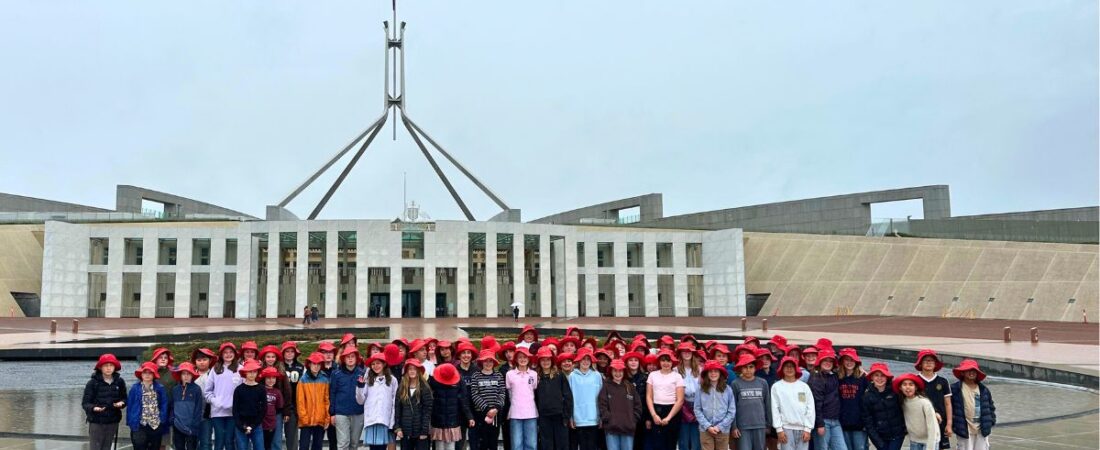
Year 6 Canberra Trip: Democracy, Discovery and Connection
Posted on June 12, 2026
Our Year 6 students recently returned from an enriching week in Canberra, where Australia’s history, democracy, culture and national identity came to life through a diverse and engaging program of experiences.
Throughout the camp, students explored some of the nation’s most significant institutions and landmarks, including Parliament House, Government House, the National Electoral Education Centre, the National Gallery of Australia, the Australian Institute of Sport, Canberra’s diplomatic precinct and the SIEV X Memorial. Along the way, they developed new understandings of citizenship, leadership, history and community, while strengthening friendships and building independence.
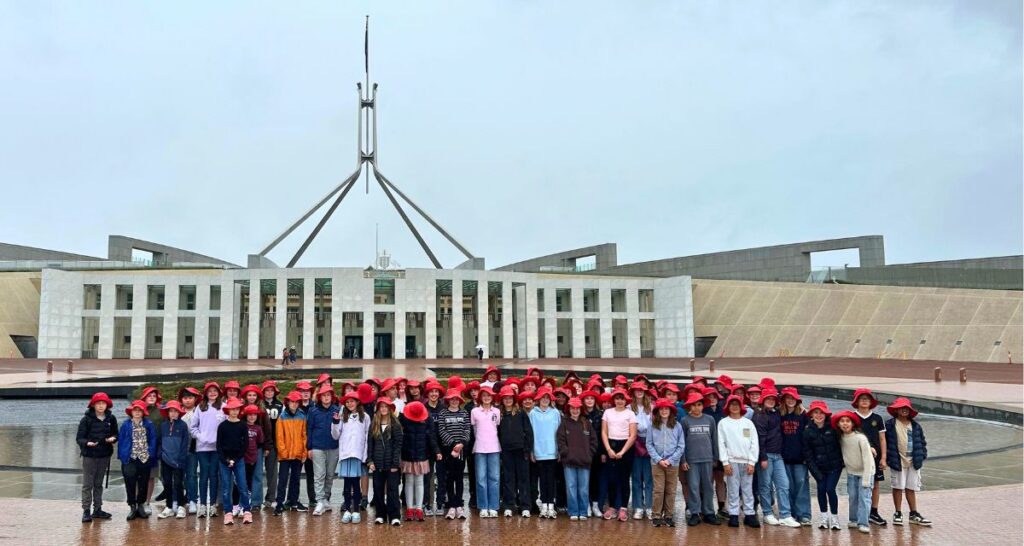
One of the highlights of the trip was the opportunity to visit Government House and meet Australia’s Governor-General, Her Excellency Sam Mostyn AC. Students learned about the Governor-General’s role through the “Four Cs” – Constitutional, Ceremonial, Community and Commander-in-Chief – and gained insight into the responsibilities that support Australia’s parliamentary democracy.
Reflecting on the visit, Cecile D. wrote that many students’ favourite part was “meeting the Governor-General who was very warm and welcoming and talking to her about her role and the four Cs and learning so much all about her.” Students also learned about the history of Government House and its role within Australia’s system of government.
The study of democracy continued at the National Electoral Education Centre, where students participated in an interactive mock election. Through roleplaying as voters, polling officials and scrutineers, they gained firsthand experience of Australia’s electoral system and learned how preferential voting works.
Shravya H. described the experience as “a really great way to connect history with real-life voting”. Students explored the history of the secret ballot, women’s suffrage and Federation before stepping into a simulated election, discovering how votes are counted and why every vote matters. As Shravya reflected, the experience demonstrated that “every single vote carries a lot of weight.”
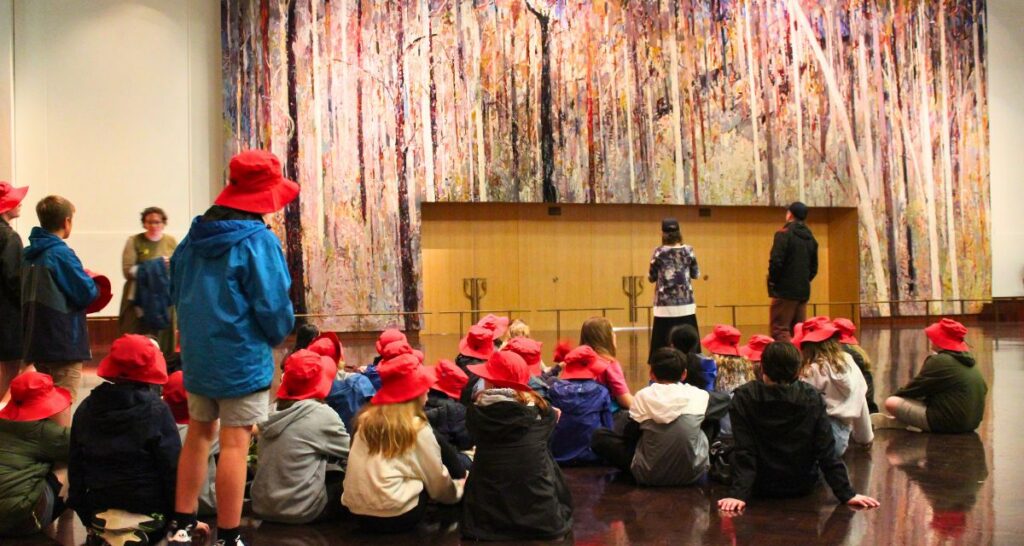
The camp also encouraged students to engage thoughtfully with Australia’s history and diverse perspectives. At the National Gallery of Australia, students explored significant Aboriginal and Torres Strait Islander artworks and considered stories of identity, culture and connection to Country.
Student reflections highlighted the impact of the experience. Ella B. shared that “it was fun to see other people’s perspectives and how it was cool to see all the artworks and how they are so different,” while Oliver found the Family Tree artwork “really interesting” and reflected on learning more about the experiences of the Stolen Generations.
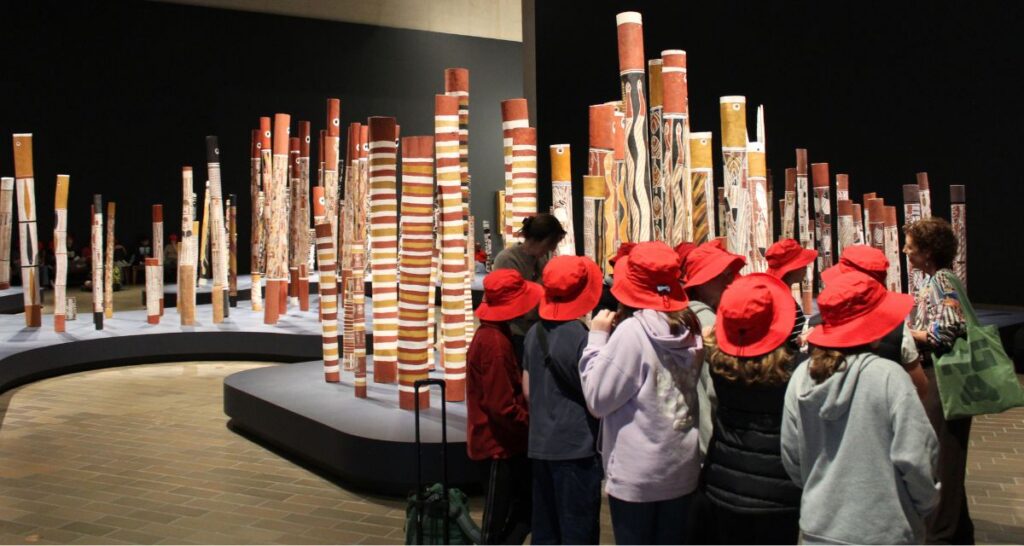
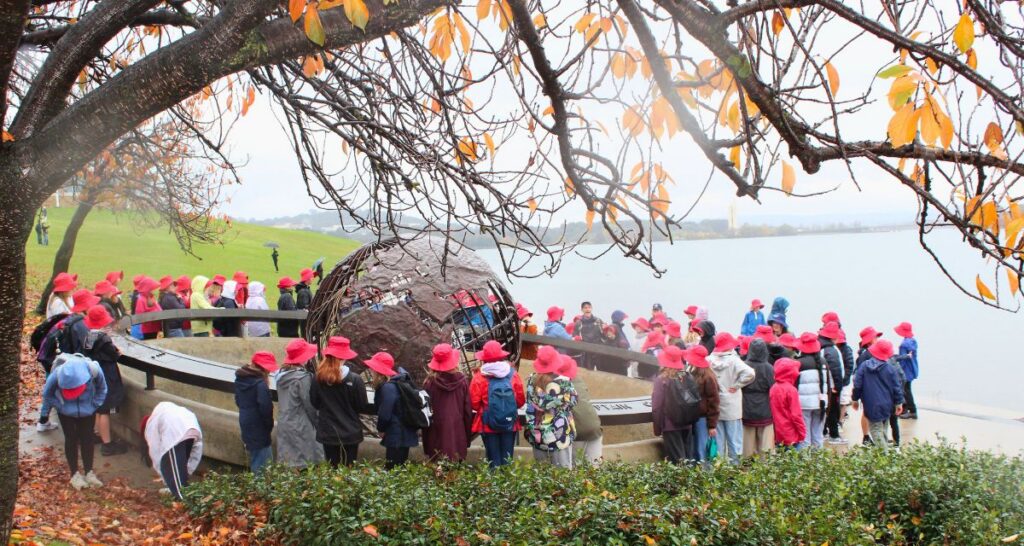
A visit to the SIEV X Memorial provided another powerful opportunity for reflection. Guided by Julian Robertson, a former Friends’ School teacher, Quaker Co-ordinator and Presiding Member of the Board of Governors, students learned about the memorial’s 353 poles, each commemorating a life lost when the vessel SIEV X sank in 2001. Julian’s longstanding connection to The Friends’ School and the wider Hobart community brought an added depth to the experience, helping students engage thoughtfully with themes of compassion, remembrance and social justice.
Many students were moved by the stories represented there. Holly F. reflected, “I enjoyed looking at all the pretty paintings on the poles and learning the names of the people,” while others spoke about the importance of acknowledging those represented in the memorial and learning more about their lives.
Students also explored Australia’s place in the global community through a visit to Canberra’s diplomatic precinct. Sam B. described the embassy district as a place where “it’s like you’re in China, Papua New Guinea and Italy all at once.” Through visits to embassies and high commissions, students learned about diplomacy, international relationships and the role these institutions play in supporting citizens overseas.
At the Australian Institute of Sport, students gained insight into the dedication and commitment required of elite athletes. Touring training facilities and seeing athletes in action gave students a glimpse into high-performance sport and the pathways available to aspiring athletes.
Evelyn C. reflected that “AIS was really fun because there were a lot of fun activities”, while Sienna D. shared, “I liked the AIS because of Sportex. It was a really fun interactive activity for us. I liked how we saw all the Olympic training sessions.”
Beyond the formal learning opportunities, the camp created space for students and staff to connect in new ways. Arabella C. interviewed staff members about their experience of the trip, capturing reflections on the strong sense of community that developed throughout the week.
Year 6 teacher Nathan McCulloch shared that “the most enjoyable part of Canberra was the creation of new communities, like different students spending more time with different people in the cohort.” He noted how students connected through shared interests, with communities forming around activities such as music and running.
Similarly, librarian Sharon Ryan reflected that “we only get to see a part of each other in school while in Canberra we get to see the bigger picture of each other’s lives.” She observed that the experience allowed students and staff alike to learn something new about one another each day and develop deeper connections.
Reflecting on the week as a whole, Head of Primary School Mark Febey said:
“The students had an outstanding experience and represented themselves and our School with a quiet confidence that reflects the collective efforts of the entire Primary team who have supported them throughout their School life.”
The Canberra Camp remains a significant milestone in the Year 6 journey at The Friends’ School. Through hands-on learning, meaningful conversations and shared experiences, students returned with a deeper understanding of Australia’s democratic systems, cultural heritage and place in the world, along with memories and friendships that will last well beyond their Primary School years.