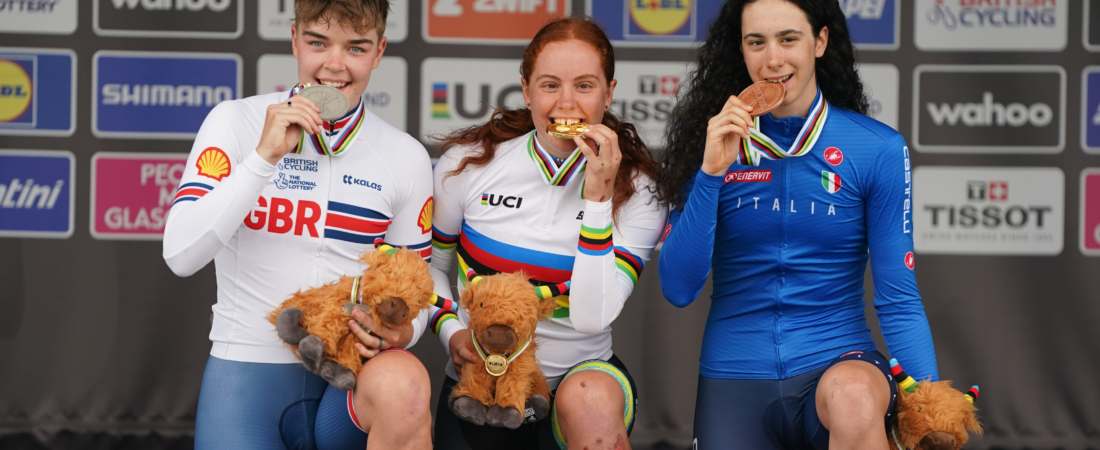
Fliss Wilson-Haffendon (2023): Fast-Tracking to the World Tour
Posted on April 15, 2026
Felicity “Fliss” Wilson-Haffendon (2023) is a champion cyclist who competes internationally with the Lidl-Trek team. “I’m happy,” says Fliss from her base in Spain. “It’s what I want to do.”
Where are you exactly?
I’m in Girona, which is an hour or so north of Barcelona. It’s crazy – this beautiful old town with cobblestones. I think some of Game of Thrones was filmed here.
Why Girona?
My contract says I have to be in Europe but where is completely my choice. The weather is pretty good in Spain, and it’s cheaper than other European countries – I have my own apartment – and Girona is a really nice town. It’s like a cycling Mecca. All the English-speaking cyclists flock to one place in Europe.
Tell us about your contract.
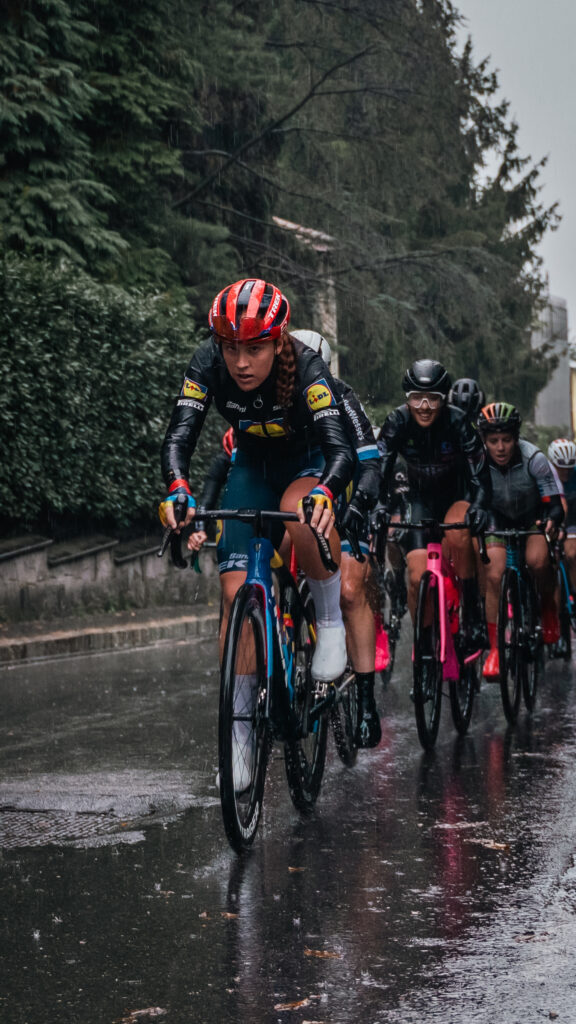
I signed a contract with the Lidl-Trek team in October of 2023. I ride with a World Tour team, and the World Tour calendar operates most races in Europe, so you have to be here to be flown to the races. Cycling in Europe is huge, comparable maybe to AFL in Australia.
How did you get into cycling?
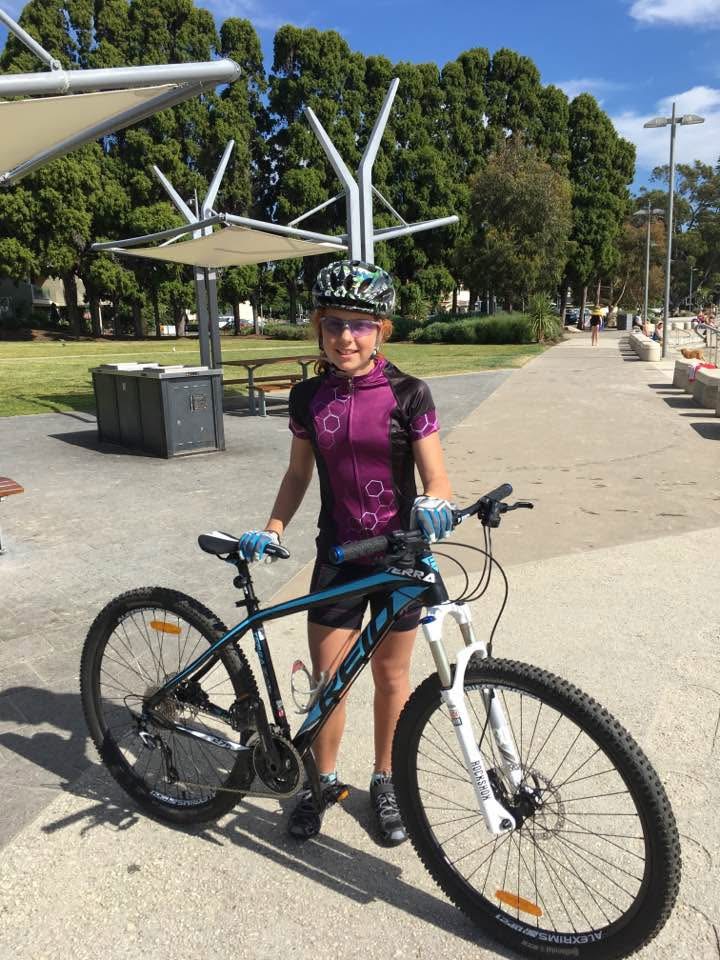
I started when I was at Friends’. When we had Covid lockdowns, I was in Year 9, and we were doing classes until maybe 1PM. Then we had unstructured time in the afternoon to access teachers or whatever. But if I had my work done, then I had a whole afternoon to ride my bike – that’s the way I saw it. I could ride my bike between 1 and 4PM, then come back and do some work afterwards.
So you weren’t competing or training? You were just having fun on your bike?
Exactly. I was just enjoying it. And then the Tasmanian Institute of Sport put out a talent ID search: “Come to a cycling test” or whatever. “If we think you’re good, you can stay. If not, we’ll give you some advice.” And I went and did it and, yeah, I must have been OK. By the end of Year 9 in Friends’, I was starting to really train. Year 10 was when I had my first chance to go to Europe.
To compete?
Australia runs a junior training camp in Belgium, a country that’s massive for cycling. So you’re based there and travel around and do some races. It was the Tour du Gévaudan, like a Junior World Cup in France. In Australia you ride a race and there are 20 other people on bikes around you. Then you get to Europe and there are 150, and I’ve only just started, so I’m still trying to keep myself upright half the time.
How did you go?
I crashed, not even in the first race – in the first training. It happens. The other girl and I got back up, went to the first race. I think my bike was falling apart and we were zip-tying the rear wheel in. I loved the disaster of it because it’s challenging. Like, everything can go wrong in cycling, but you can still have a good result because everything’s going wrong probably for a lot of other people too. It’s the nature of it.
Were you serious about cycling by then?
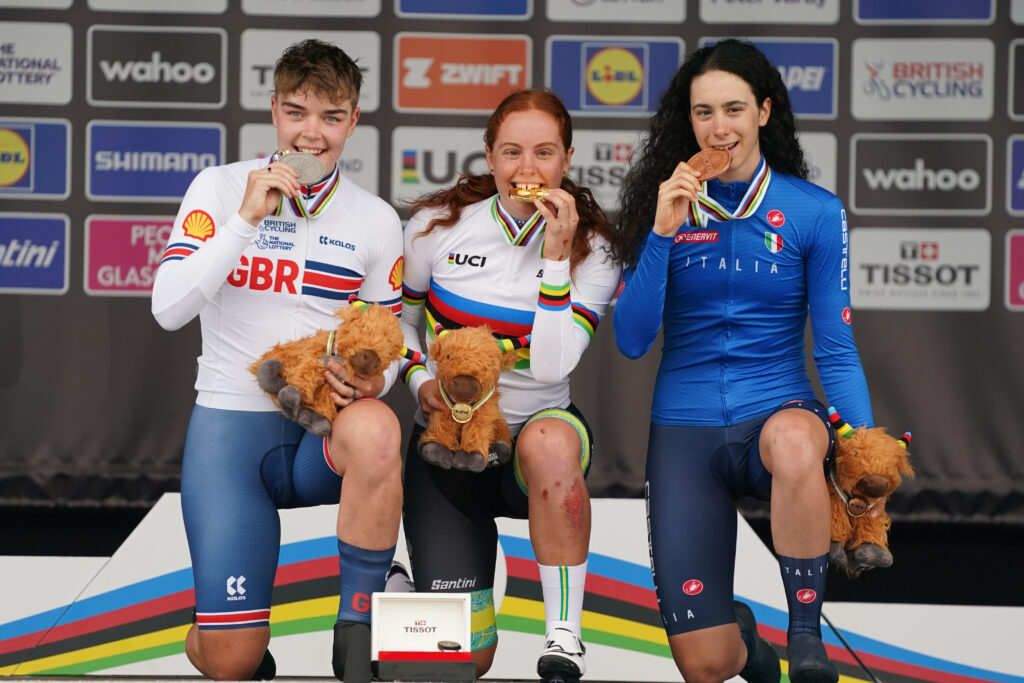
It was something I wanted but hadn’t committed to. I was also playing hockey on the state team. I wasn’t exceptional but there was a path for me. And I was thinking: I can keep playing hockey, it’ll work. And then: actually, no, this is something I want. I finished Year 10 and won all three events at the national championship in January. Then I went to the Junior World Championships and won. I finished year 12 and signed the three-year contract. The goal pretty much for every road cyclist is to join a World Tour team. I was never expecting to do this my first year out of Juniors.
Did starting a bit older give you any advantages or disadvantages?
I definitely started later than most. Europeans start bike racing when they’re 6 or 8 years old. It’s like a club sport on a Saturday. With any sport, if you start full gas at eight years old, you’re already 10 years in by the time you’re 18 and it’s boring after a while. With cycling, you can come in late like I did. It’s got a lot of skill but, actually, in terms of going fast, you just need to be strong.
Do you do any mindset training?
This is growing in cycling. A lot of people say a race is 40 per cent physical and 60 per cent mindset. Within my team, it’s a huge focus. They have a team sport psychologist, and they’re also happy to help you find an external person, if that’s what you want.
Has anyone said anything that’s really helped you?
A lot of people tell me it’s about a process, not the outcome. It’s more about doing all the steps right, then the outcome is what it is. So, normally I have 140Ks between the start and the finish line. If I’m 10Ks into a race and thinking, “I have to be first at the finish line,” I’m not thinking about what I’m meant to do in this moment. A lot needs to happen to be first at the finish line.
Have you thought about the future?
I want a long career in cycling, but a long career in cycling takes you maybe to the age of 35. And if you’re really at the top of your game you could finish at 35, even earlier, and not have to work. This isn’t what I want to do necessarily. A life after cycling is also something that excites me. I have my education up to year 12, and I’m trying to figure out what sort of study I want to do. Veterinary science would be my dream.
Can you talk about the work you’re doing with younger cyclists?
Even with hockey, I always had a junior team to coach or umpire. You get to see where you were for five, 10 years ago, and how much these kids look up to an older person. We have the Hobart Wheelers in Tassie, and they run a junior track. I was going once a week to help them learn the basics – how to ride a track bike, how to ride in a bunch of people. I just want to be someone that these kids can come to and say, “I’m really nervous about my club race. Can you help me?”
Obviously, I can’t physically be there now. But with my team, I get so much cycling kit and, because sponsors change, you can only wear it for one year and then it’s done. And it’s expensive. Cyclists know that one jersey and a pair of knicks costs upwards of $300. So I go home with boxes of kit to take to the club. And it’s hilarious because there’s all these little humans running around with jerseys hanging off them, like “I was there”. They trash them, rip them to pieces, and it doesn’t matter.